Overview
Problem
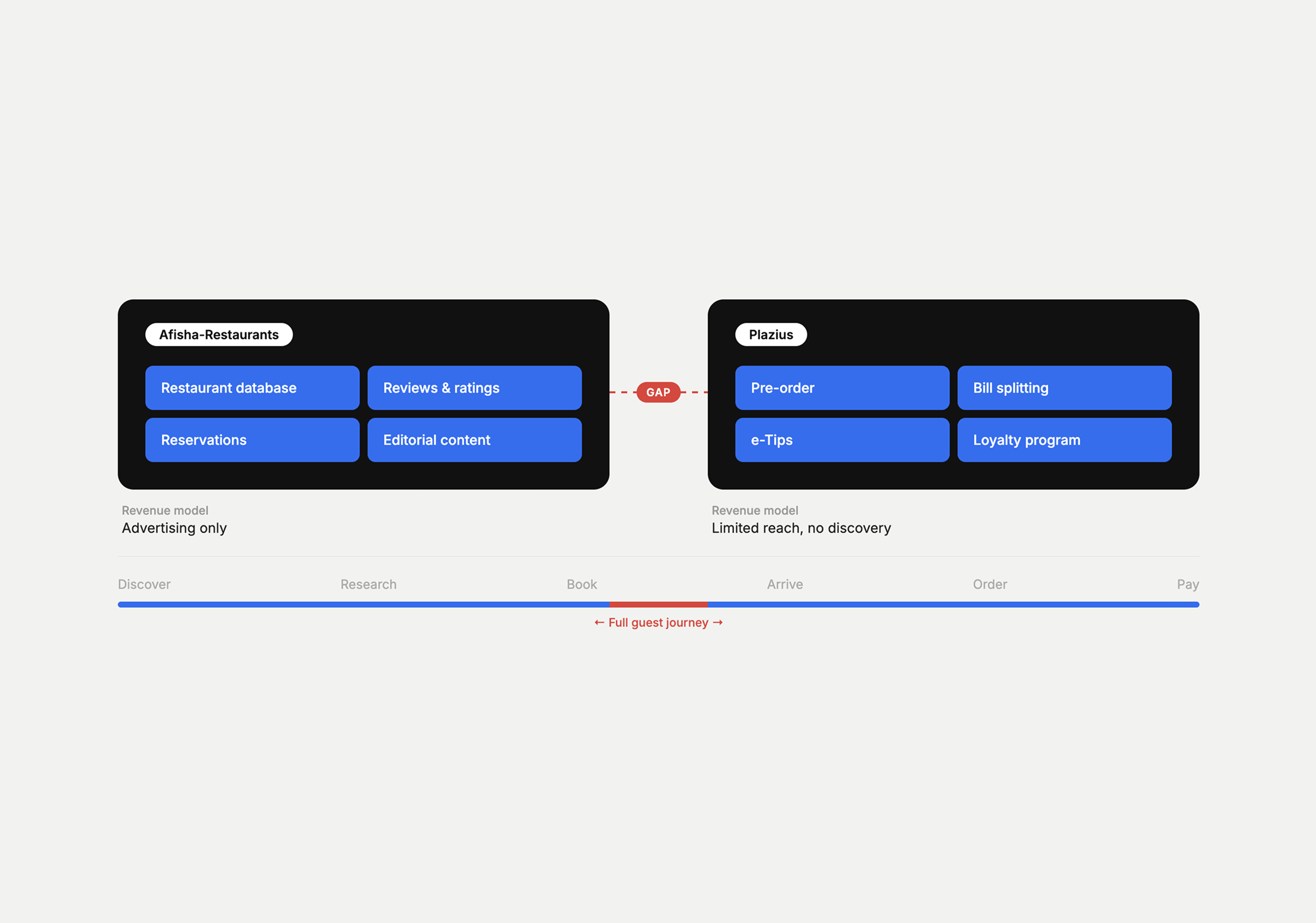
Sberbank's portfolio included two apps aimed at the same audience, each covering half of the guest journey:
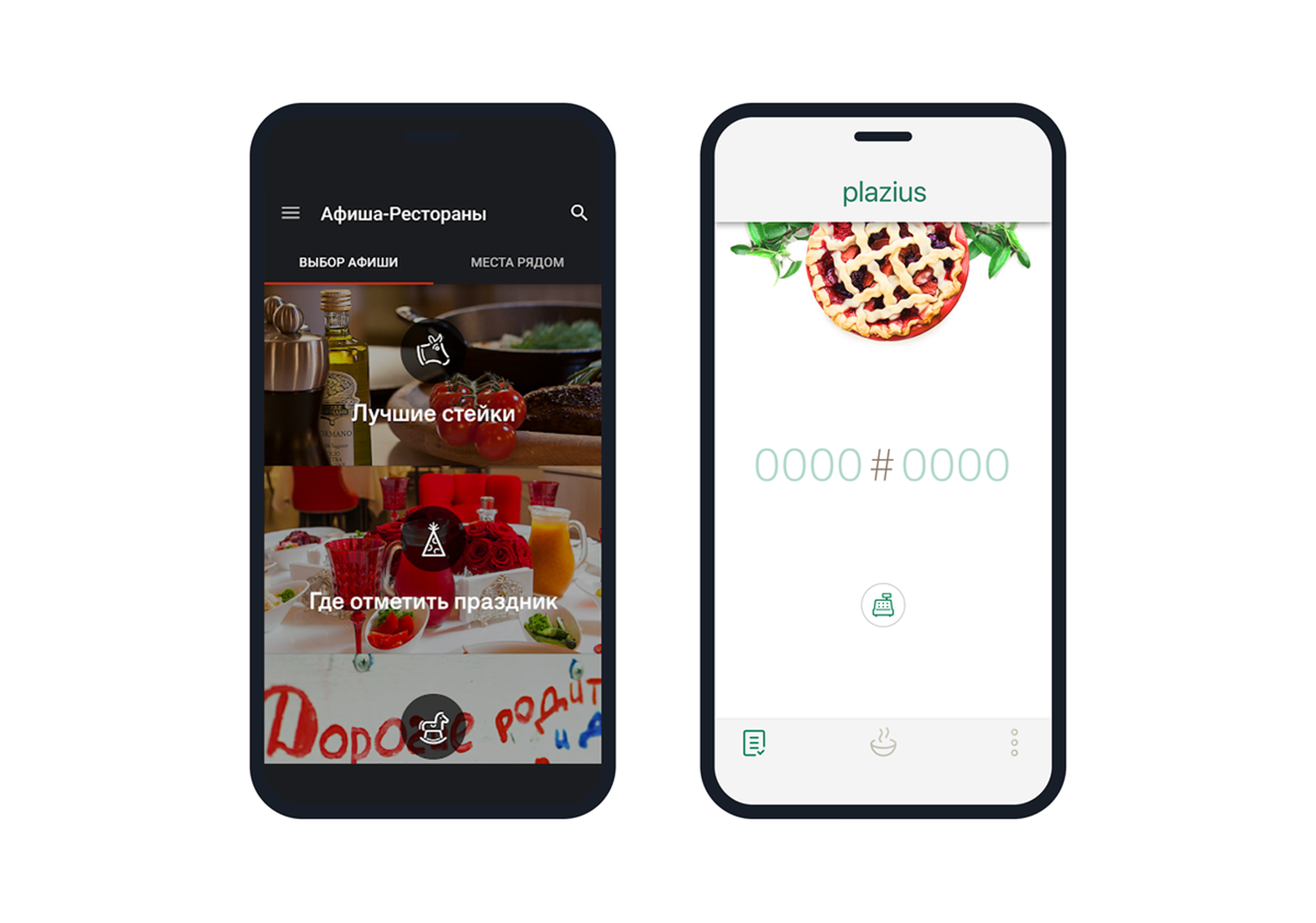
Afisha Restaurants owned discovery — a restaurant database, reviews, and reservations — built on the magazine's legacy audience, but monetized only through advertising.
Plazius owned the on-site experience — pre-order, bill splitting, e-tips, loyalty — but had limited reach in both restaurants and users.
Neither product alone covered the full guest journey, and neither could monetize beyond its narrow slice of it.
Hypothesis
If one app combined Afisha's discovery strength with Plazius's transactional features, it could give Plazius distribution through Afisha's audience and locations, while giving Afisha a path to transaction-based revenue instead of advertising alone.
Discovery
The art director facilitated a Google Design Sprint. We split the work by functional area: I focused on the in-restaurant experience (pre-order, payments, loyalty), my colleague on discovery scenarios (search, reviews, booking). We each defined personas and user stories for our area, then cross-reviewed each other's work before mapping both into a single CJM. This surfaced where the two journeys should connect and produced the initial backlog and key screen drafts.
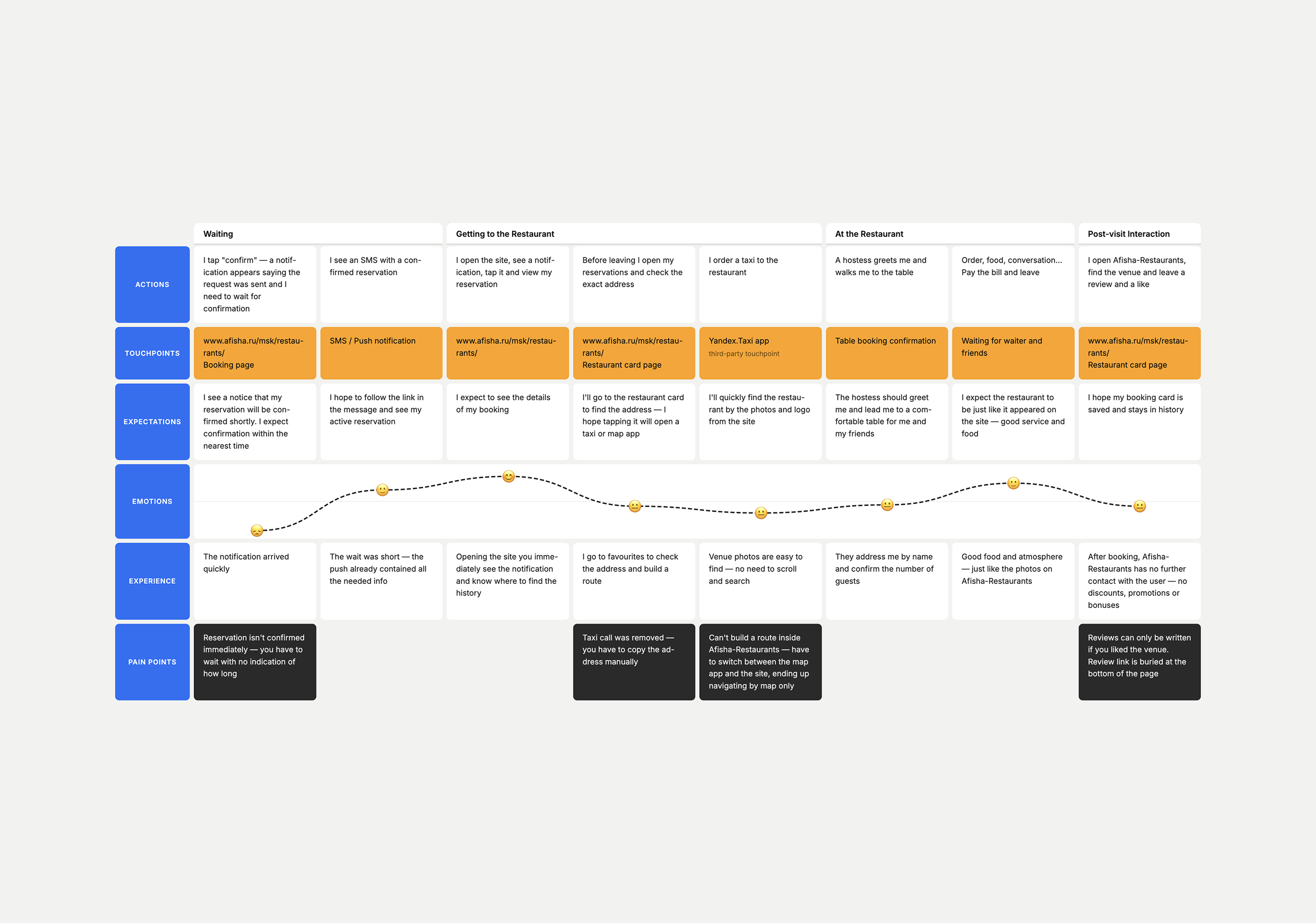
The Afisha CJM exposed where the journey broke down after booking: no taxi or route integration to get the user to the restaurant, and no contact with the user after the visit — no promotions, no easy way to leave a review. These gaps mapped directly onto what Plazius already solved on-site, confirming where the two products needed to connect.
Initial design
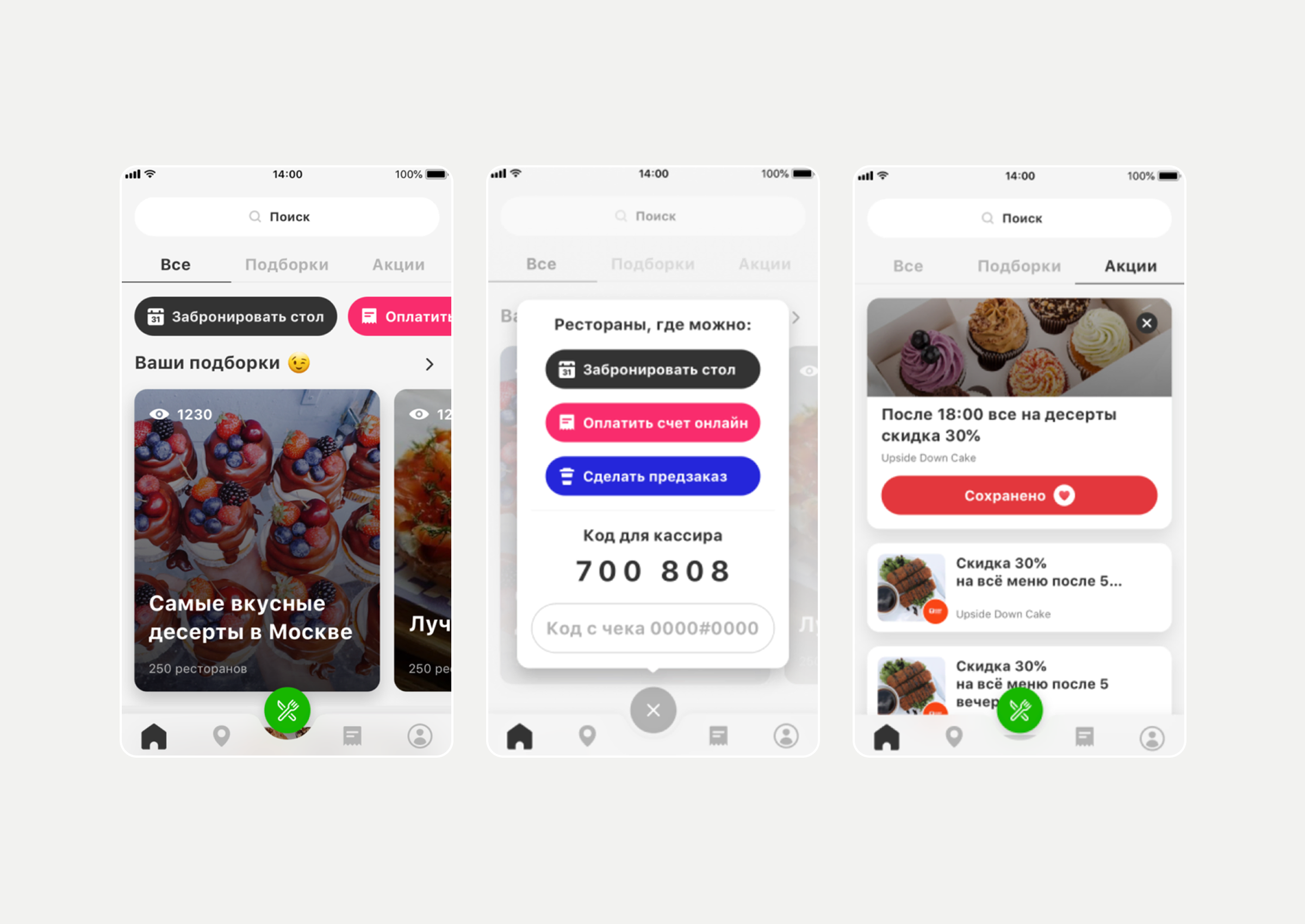
After stakeholder alignment, the design team built out the first full UI and a design system to give the merged product its own visual identity, distinct from both legacy apps.
Validation
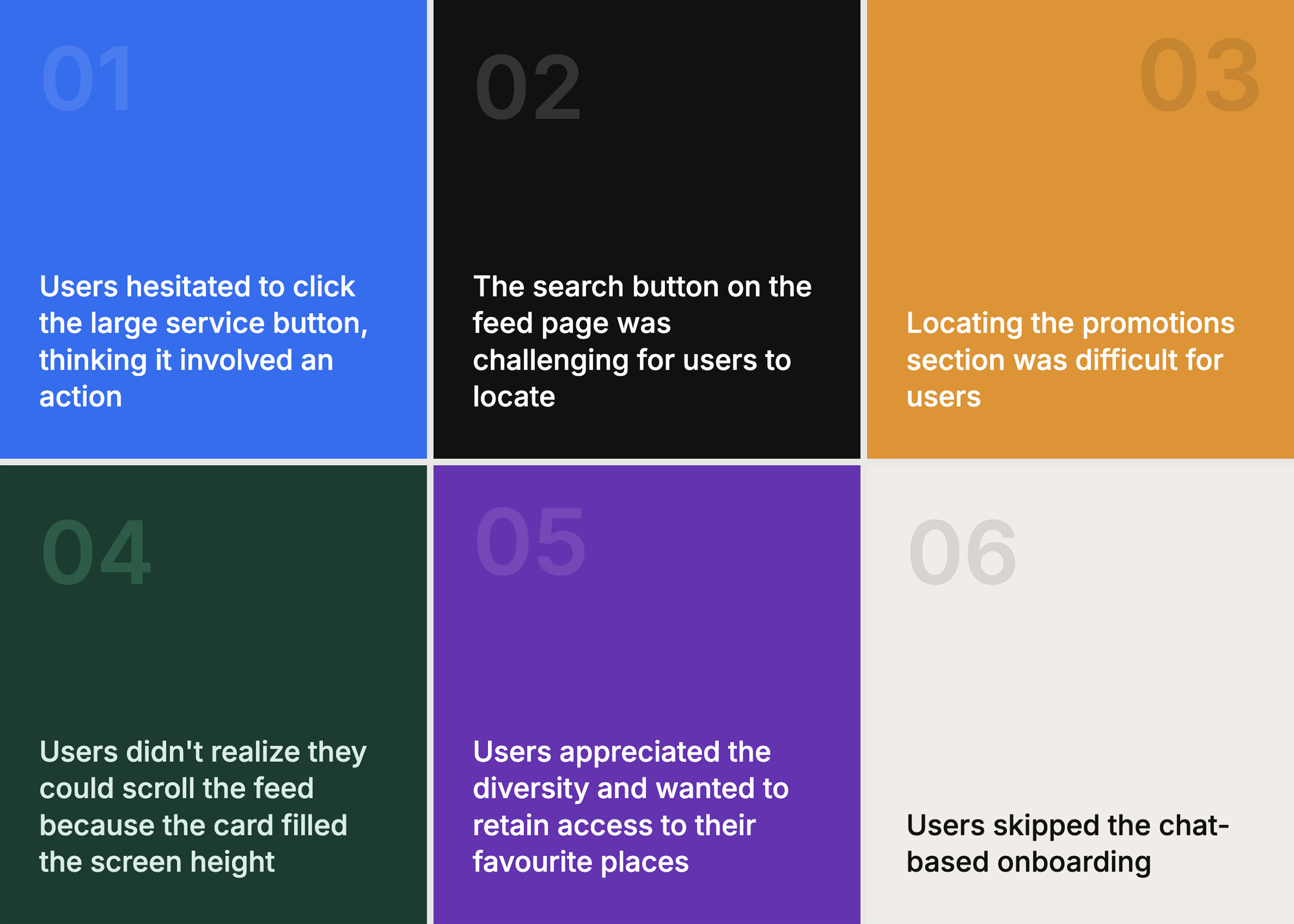
We ran 15+ interviews, 10+ hallway tests in cafes and food courts, and surveys across 10+ prototypes per use case. Six findings shaped the next design iteration:
Refined design
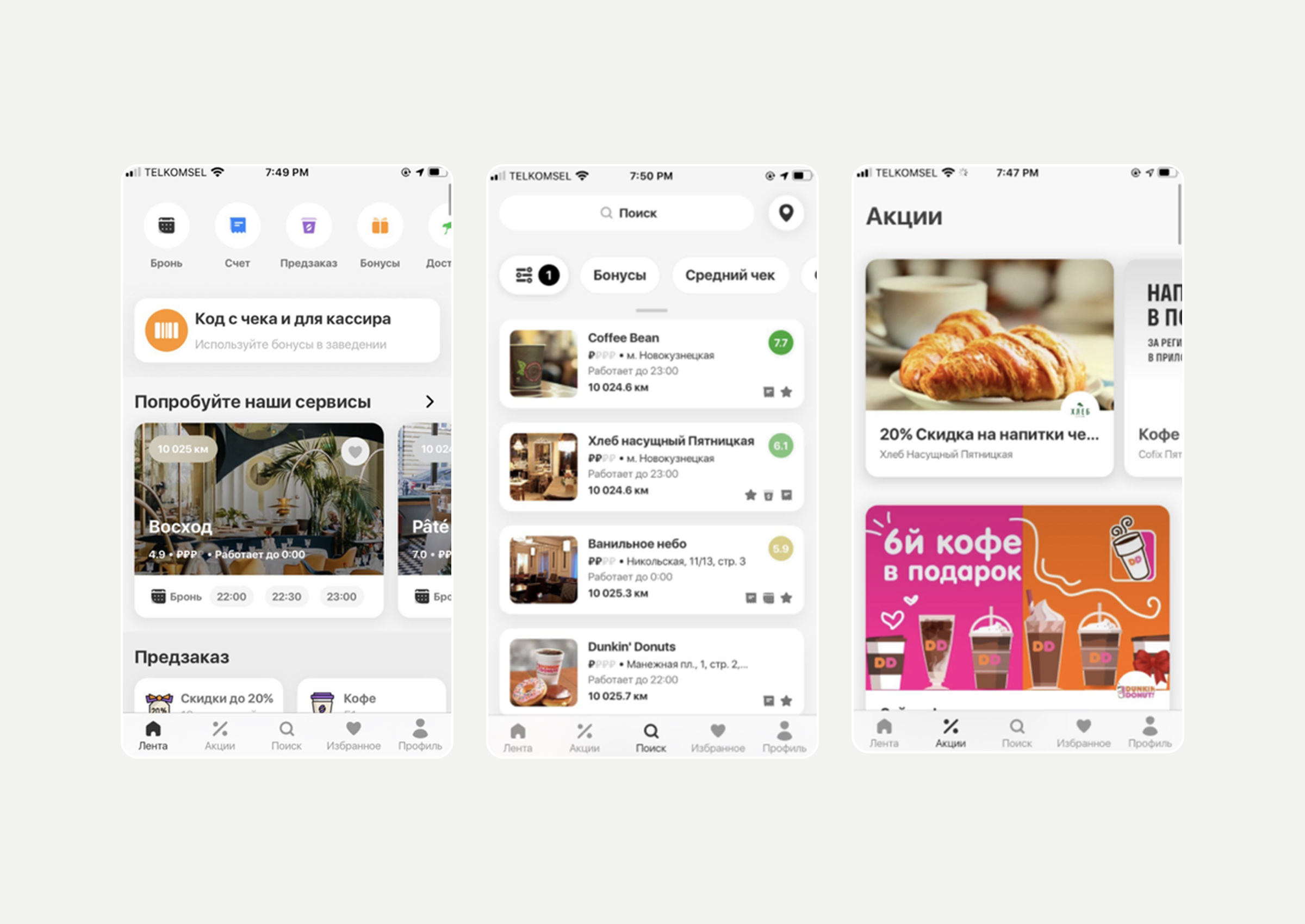
Each fix mapped directly to a finding above:
- Moved service buttons from the quick-access button to the feed's top bar — fixing the false-action confusion.
- Created a separate tab for promotions — fixing discoverability.
- Reduced venue card size and added booking times — fixing the scroll-discovery issue.
- Modified the navigation panel for faster access to saved venues.
Result
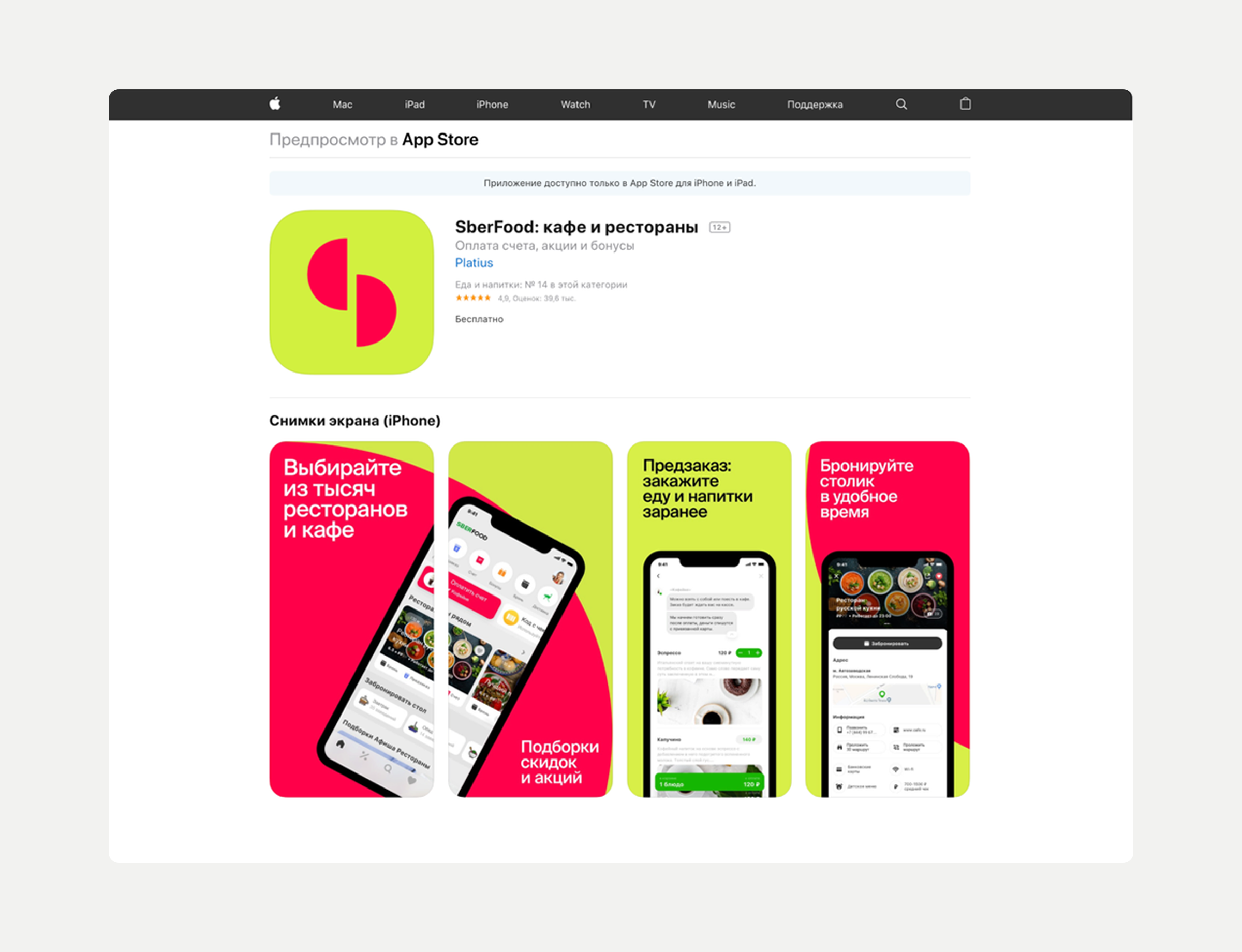
These changes shipped in the public release. SberFood launched on the AppStore with 39.6K+ ratings and a 4.9 average, going on to reach 1M MAU and $2M in annual revenue.